2021年2月25日星期四

Raw material control of a self loading concrete mixer with pump

 Raw material control of a self loading concrete mixer with pump not only influences quality of mixed concrete but also has a great impact on the pump’s service life, for inappropriate raw materials accelerates damages to wearing parts of the machine. Then how to control raw materials?

Cement

Cement is a hydraulic cementing material. General-purpose cements include Silicate cement, ordinary Silicate cement, and Silicate slag cement, etc. All of these should conform to the GB175-99 and GB1344-99 standards.
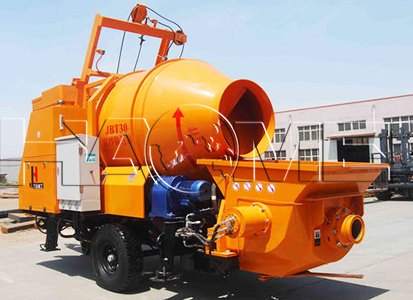
This is a self loading concrete mixer with pump.

Fly Ash

As a commonly used admixture for pumping concrete, finely ground fly ash helps significantly improve the mobility of the concrete mixture, reduce the drying shrinkage, and greatly improve the pump ability of the concrete. The adding of a certain amount of fly ash can also reduce the hydration heat of the cement, which is beneficial to control the occurrence of temperature cracks of the roughly accumulated concrete structure.

Sand

Among all sands, river sand is the most commonly used construction concrete material pumped by a concrete mixer pump. The texture and standard of sand should meet the requirements of JGJ52-92 "Quality Standard and Inspection Method of Sand for Common Concrete". Sand is divided by thickness and fineness, which are separated by coefficients. Medium sand is commonly used in pumping concrete, and its modulus is (3.0-2.3).

Stone

Stones are classified into igneous rocks, accumulative rocks, and metamorphic rocks according to their geological origin. Most igneous rocks are good stone materials. Stones used for pumping concrete should be suitable for "Quality Standard and Inspection Method of Crushed Stone or Pebble for Common Concrete" JGJ53-92.

Admixture

Admixtures are generally mixed before the concrete is mixed, and the total amount shall not exceed 5% of the cement weight. Commonly used admixtures include water-reducing agents, air-enriching agents, setting regulators, antifreeze, etc. The quality of the admixtures should comply with the "Concrete Agent Quality Standard" JBJ56-84.


The above are the requirements of control for concrete raw materials of a self loading concrete mixer with pump.

Reprinted from https://www.haomei-machine.com/news/technologynews/concrete-mixer-pump-material-control.html

2021年2月22日星期一

How to extend service life of a portable concrete mixer and pump

 A portable concrete mixer and pump plays a crucial rule in modern construction. Some clients might be confused with the fact that their pump serves a shorter time than expected. Why? The answer lies in inappropriate running and lack in maintenance. To extend the service life of a portable concrete mixer pump, you are advised to take the following tips.

First, choose the original accessories rather than cheaper ones. Original accessories may cost more, but they bring the best cooperative effect of the machine.

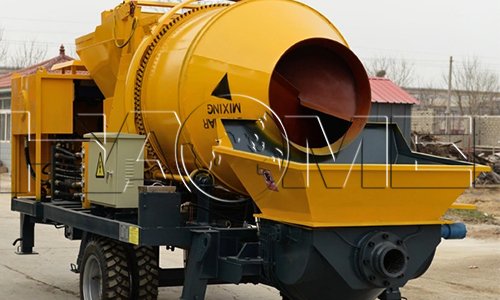
portable concrete mixer and pump

Second, any concrete pump has its own working temperature scope, and even each of its devices has their own temperature range. Running a pump at a temperature below or above its given temperatures will lead to wearing of its accessories, transformation of its lubricants and even changes of pumped concrete. Therefore, it’s necessary to have the pump running for a while without concrete in winter until its temperature gets to the normal state. In the same way, you need to prevent the trailer pump from overloading at high temperatures. Once the value on the thermometer is abnormal, the pump should be shut down immediately for inspection. It is strictly forbidden to continue pumping concrete without eliminating the problem.

Third, bear in mind that either a stationary or portable concrete mixer and pump is only used for mixing and pumping concrete rather than other materials. In addition, it is necessary to prevent impurities from entering the pump, which will not only accelerate the wear of the parts, but also damage the lubricating oil film, causing the temperature of the parts to rise and the lubricating oil to deteriorate. Therefore, we must use high-quality, supporting parts and lubricating oil and grease. Once the mixing pump fails, you should try to repair it at a regular repair place. In the on-site repair process, special attention should be paid to prevent the replaced parts from being contaminated by dust and other impurities before entering the machine.

Fifth, please do not running a concrete mixer pump on slopes, near high voltage equipment or in any other dangerous environments. Special measures should also be taken to reduce erosion of the pump parts from rain, air and other pollutants.


Last but not least, the most efficient way to solve the failure problems of a portable concrete mixer and pump is to contact the after-sales unit, or the maintenance center rather than trying to “do it yourself”.

Reprinted from https://www.haomei-machine.com/news/technologynews/how-to-extend-concrete-mixer-pump-life.html